Memvora
High Frequency PCBs in Portugal: Industrial Demands & Commercial Landscape
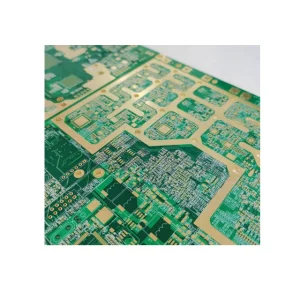
Portugal's high-tech industrial manufacturing ecosystem is experiencing a major transition, fueled by advancements in aerospace, automotive electronics (notably around clusters in Setúbal and Porto), and the expansion of 5G telecommunication networks. European design houses based in Lisbon, Aveiro, and Braga demand high-frequency PCBs that support micro-millimeter wave technologies, high bandwidths, and minimal propagation delays. However, local prototyping capacities often hit structural bottlenecks when handling advanced substrates like Rogers, Taconic, or Arlon. This creates a strategic reliance on global supply chains that offer both speed and reliability.
The Norte Region of Portugal, renowned for its industrial competence, is leading the integration of embedded computing units and advanced automotive radar systems (77GHz and 79GHz). These applications require strict impedance control, highly controlled relative permittivity (Dk), and exceptionally low dissipation factors (Df). Utilizing standard FR-4 is insufficient. Engineers are shifting to hybrid stacking configurations, combining Rogers materials with high-Tg FR-4 cores to control costs while maintaining signal integrity at gigahertz ranges.
Material Engineering for High-Speed Electronics
Operating in frequencies above 5 GHz requires precise design constraints to prevent signal attenuation and phase distortion. Our specialized manufacturing lines address these critical parameters:
For custom industrial projects in Portugal, combining these advanced materials with precise copper foil treatment (such as reverse-treated or very-low-profile copper) helps eliminate skin effect losses at high frequencies. This approach is crucial for Portuguese exporters of telecommunication units and military-grade transceivers who require certified performance under challenging conditions.