Understanding what is DRAM memory is crucial in today’s tech-focused world. DRAM, or Dynamic Random Access Memory, plays a vital role in computers, smartphones, and various digital devices. It is essential for data storage and processing speed. However, many people overlook its significance until they encounter performance issues.
DRAM memory is different from other types, like SRAM. It needs constant refreshing of data, making it more complex yet affordable. This introduces a fascinating aspect of technology that invites further investigation. Users often question how DRAM affects their devices’ performance. When memory runs low, apps lag, and multitasking becomes a challenge. It can be frustrating, yet it opens up opportunities for learning.
In this discussion, we will explore the intricacies of DRAM memory, providing insights into its functions and applications. This journey will also highlight common misconceptions that arise. Gaining a clear understanding of what is DRAM memory can lead to better device management and selection.
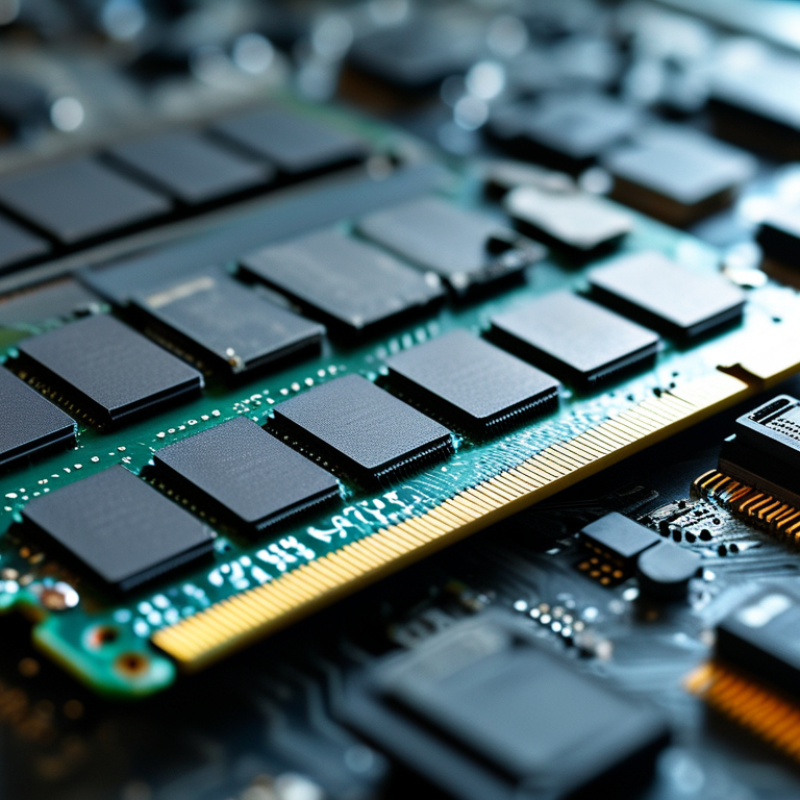
What is DRAM Memory? A Comprehensive Definition
Dynamic Random Access Memory (DRAM) is a type of volatile memory crucial for computer systems. It stores data temporarily, losing information when power is off. DRAM is widely used in devices like desktops, laptops, and servers due to its speed and efficiency. It functions by storing bits of data in tiny capacitors. These capacitors need constant refreshing to maintain the stored information, making DRAM different from non-volatile memory types.
When using DRAM, it's vital to consider its speed and capacity. The performance can drastically enhance operations in gaming, graphic design, and data analysis. More DRAM can lead to smoother multitasking experiences, as it allows more applications to run simultaneously. A common tip is to assess your needs before upgrading. If you’re a casual user, standard memory may suffice. However, power users should prioritize higher capacity for optimal performance.
It's also essential to be mindful of how you manage memory resources. Overloading your system with too many active processes can lead to slowdowns. Take your time to examine running applications and close unnecessary ones. Regular maintenance helps in maximizing the efficiency of your DRAM. A well-optimized system contributes to better overall user experience.
The Structure and Functionality of DRAM Cells
Dynamic Random Access Memory (DRAM) is a vital technology in modern computing. Understanding how DRAM cells are structured and function can demystify their importance. Each DRAM cell consists of a capacitor and a transistor. The capacitor stores electrical charge, representing data, while the transistor acts as a switch.
These components work together to read and write data. When the capacitor is charged, it signifies a binary '1'; when discharged, it represents a '0'. This simplicity is the strength of DRAM, enabling quick access to information. However, the need for periodic refreshing of the data in these cells can be a drawback. This refresh cycle could lead to slower performance if not managed correctly.
Tip: Regularly check for memory usage in your system’s settings. If it’s consistently high, consider upgrading your RAM for smoother performance.
DRAM is widely used in devices like smartphones and laptops. Its lightweight and compact design support high storage densities. Yet, with evolving technology, the push for alternatives is ongoing. Some argue that newer types may better meet performance demands.
Tip: Keep an eye out for emerging memory technologies. They might revolutionize speed and efficiency in the near future.
Common Uses of DRAM in Modern Computing Devices
DRAM, or Dynamic Random-Access Memory, plays a crucial role in modern computing devices. It provides fast data access, enabling efficient performance. According to industry reports, DRAM is projected to account for 30% of the total semiconductor market by 2025. This statistic highlights its growing importance in technology.
In smartphones, DRAM is essential for multitasking. Users switch between apps seamlessly because of this memory type. Research shows that devices with higher DRAM capacities, such as 8GB or more, improve user experience significantly. Similarly, in personal computers, DRAM enhances gaming and graphic design applications. Many programs require substantial memory to run smoothly, illustrating the dependency on DRAM.
Server environments also heavily rely on DRAM. Data centers use it to process vast amounts of information quickly. Recent trends indicate that cloud services demand larger DRAM modules, as they handle multiple client requests simultaneously. While DRAM is efficient, it comes with challenges, such as heat generation and power consumption. Addressing these issues remains a focus for manufacturers and researchers alike.
How to Understand What is DRAM Memory and Its Uses? - Common Uses of DRAM in Modern Computing Devices
| Applications |
Description |
Memory Type |
Capacity Range |
| Personal Computers |
Used as primary memory for running applications |
DRAM |
4GB to 64GB |
| Smartphones |
Supports multitasking and smooth gaming experience |
LPDDR4/LPDDR5 |
2GB to 16GB |
| Gaming Consoles |
Facilitates high-performance graphics and quick loading times |
GDDR6 |
8GB to 24GB |
| Servers |
Handles large volumes of data and concurrent users |
ECC DRAM |
16GB to 1TB |
| Embedded Systems |
Used in devices with limited space and power |
DRAM |
512MB to 4GB |
Comparison of DRAM with Other Types of Memory
Dynamic Random Access Memory (DRAM) is crucial in modern computing. It allows quick data access, making it essential for tasks requiring speed. Comparing DRAM with other memory types reveals important differences. Static RAM (SRAM), for example, is faster but more expensive. It works well for cache memory but isn't as dense as DRAM.
Flash memory, on the other hand, is non-volatile, meaning it retains data without power. It's used for storage in devices like USB drives and SSDs. However, Flash is slower when it comes to read and write speeds compared to DRAM. When speed is vital, DRAM shines, while alternative options excel in different areas.
Understanding these differences is key. DRAM's volatility means it loses data without power, while other types keep information longer. This trait impacts usage scenarios. In high-performance computing, DRAM is often preferred. However, the costs and physical space needed can lead to trade-offs. Balancing performance and cost is an ongoing challenge in technology.
Future Trends and Innovations in DRAM Technology
The future of DRAM technology is intriguing. Innovations are shaping how we use memory. New materials and designs promise higher speeds and greater efficiency. Researchers explore changes in DRAM architecture. These changes could reduce power consumption significantly. As devices become more powerful, the need for advanced memory grows.
Emerging trends focus on stacking memory chips. This allows for more data storage in less space. For example, 3D-stacked DRAM has gained attention. It enhances performance and energy efficiency. Furthermore, AI-driven memory management is on the rise. This aims to optimize memory usage dynamically, leading to faster processing.
Yet, challenges remain. Manufacturing techniques need to evolve to keep pace. The rising complexity may increase costs. There’s also a need for improved thermal management. Addressing these issues is crucial for the future. The potential is vast, but hurdles exist. Effective solutions must be developed to harness the full power of DRAM technology.
FAQS
DRAM stores data in tiny capacitors that need constant refreshing. This keeps the information accessible during power on.
DRAM boosts speed and efficiency in devices, enhancing performance in gaming, graphic design, and multitasking.
Casual users may need standard memory. Power users should consider higher capacity for better performance and multitasking.
Overloading with active processes can slow down your system. A careful look at running applications is essential.
Each DRAM cell has a capacitor and a transistor. The capacitor holds data, while the transistor switches it on and off.
DRAM is used in smartphones for multitasking, PCs for gaming, and servers for processing large data sets.
Yes, DRAM can generate heat and consume power. Manufacturers work on solutions for these challenges continually.
Some suggest newer technologies may better meet performance demands, though DRAM remains crucial for now.
Regularly check your memory usage. If it’s high, consider upgrading your RAM for improved system performance.
Conclusion
DRAM memory, or Dynamic Random Access Memory, is a crucial component in modern computing devices, serving as the main memory where active processes and data are stored temporarily. Understanding what is DRAM memory involves exploring its structure, which is built on memory cells composed of capacitors and transistors. These cells function by storing bits of data as electrical charges, allowing for fast read and write operations.
Commonly utilized in various applications, including computers, smartphones, and gaming consoles, DRAM provides the speed and efficiency needed for multitasking and demanding software. Furthermore, when comparing DRAM with other memory types, such as SRAM and flash memory, DRAM is noted for its higher density and lower cost, despite its need for periodic refreshing to maintain data integrity. As technology advances, the landscape of DRAM is evolving, with innovations aimed at increasing speed, capacity, and energy efficiency, ensuring its pivotal role in the future of computing.

 Memvora